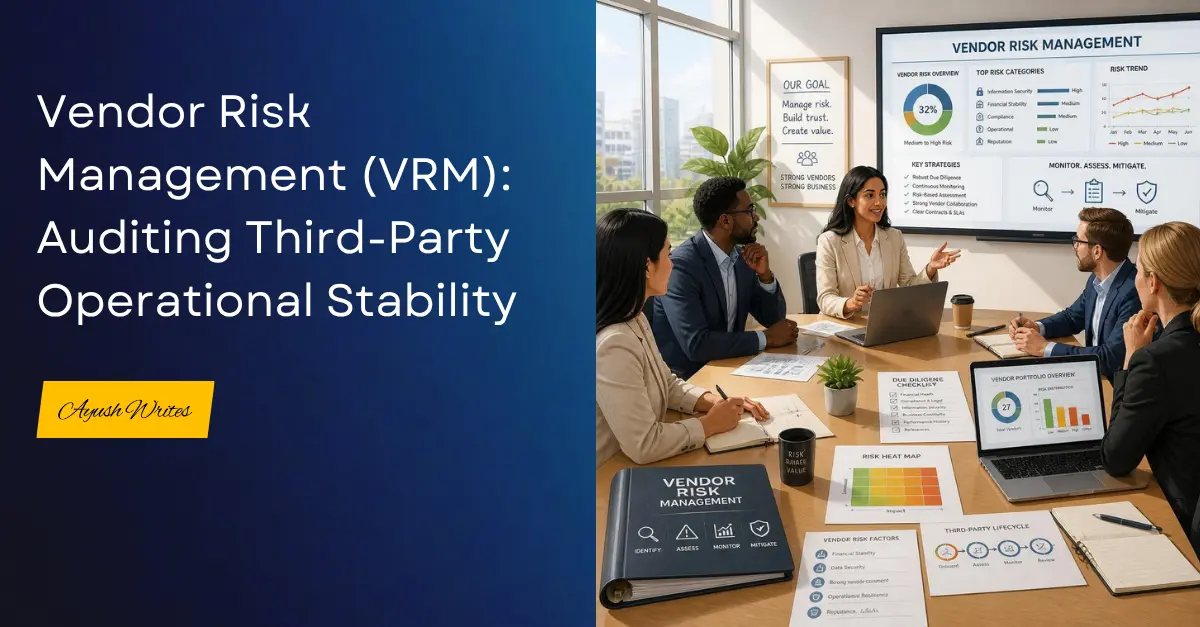


Vendor Risk Management (VRM): Auditing Third-Party Operational Stability

Vendor Risk Management

Ever wonder why adding another project management checklist or slapping a band-aid on a broken workflow never actually fixes your delivery bottlenecks? When a core operational loop is fundamentally compromised, minor surface-level tweaks won’t save your timeline or your budget.


According to a Gartner supply chain and vendor risk survey, 60% of organizations have suffered a disruptive third-party vendor incident in the past few years, proving that traditional reactive oversight leaves projects exposed to critical failures.


Vendor Risk Management is the systematic process of identifying, assessing, and mitigating vulnerabilities introduced by third-party suppliers and external partners before they disrupt project delivery.


For delivery leads and project managers, mastering this practice is no longer just a compliance checkbox; it is a core operational strategy to eliminate third-party friction, protect project margins, and drive predictable delivery outcomes. 


In this post, you will learn how to audit third-party operational stability and enforce robust risk frameworks across your entire vendor ecosystem.


What is Vendor Risk Management?


Vendor Risk Management is the ongoing process of identifying, assessing, and mitigating operational, security, and financial risks introduced by third-party suppliers and external partners throughout the project lifecycle.


Unlike traditional legacy approaches that rely on sporadic annual check-ins and static spreadsheets, this modern operational framework establishes continuous visibility and proactive validation across every external touchpoint in your delivery pipeline.


  • Eliminates Handoff Friction by establishing clear operational boundaries and accountability lines with external partners.
  • Protects Project Margins by preventing costly third-party delays, data breaches, and scope creep.
  • Drives Revenue Predictability by ensuring steady, uninterrupted project execution and client satisfaction.

Integrating this framework into your daily operations turns third-party oversight into a core strategic asset. Delivery leads gain complete control over external dependencies, stopping potential roadblocks long before they hit the execution phase.


What Are the Steps to Perform Vendor Risk Management?


Securing your project operations against third-party failures requires a disciplined, repeatable execution model that leaves nothing to chance.


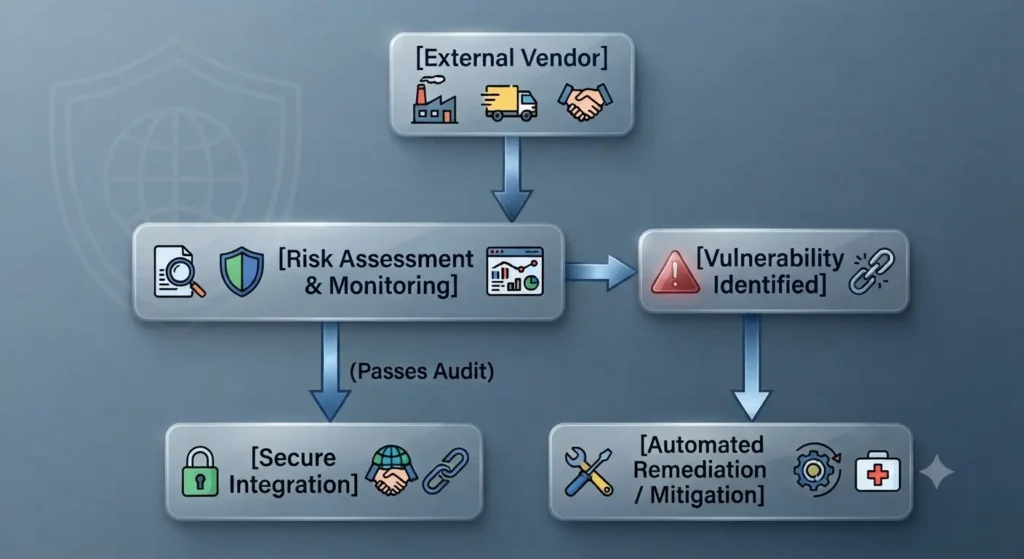
  • Identify and map all active third-party vendors, suppliers, and external contractors integrated into your current project workflow.
  • Assess Vulnerabilities by conducting deep operational and security audits to uncover potential single points of failure in delivery.
  • Establish Clear Metrics and Service Level Agreements (SLAs) that tie vendor performance directly to project milestones and financial penalties. Why? Because ambiguous expectations guarantee missed deadlines and bloated budgets.
  • Monitor continuously using automated tracking and regular reviews rather than relying on outdated, one-time annual evaluations.
  • Enforce Mitigation Plans immediately when performance dips or security gaps appear, ensuring swift resolution before project delivery stalls.


By following this structured sequence, you transition from blind trust to total operational control. This systematic execution safeguards your sprint velocity, ensuring external partners elevate your delivery capacity instead of introducing costly friction.

Vendor Risk Management Workflow
Vendor Risk Management Process

What Are the Key Benefits of Vendor Risk Management?


Proactive operational governance directly translates into healthier profit margins and resilient project delivery pipelines.


Operational Metric

Traditional / Legacy Approach

Vendor Risk Management (VRM)

Performance Goal

Reactive firefighting after failures occur

Proactive mitigation and continuous stability

Starting Point

Periodic annual reviews and static checklists

Real-time monitoring and dynamic auditing

Focus

Surface-level cost cutting and basic compliance

Total third-party operational stability

Risk & Return

High exposure to unexpected delays and breaches

Predictable delivery timelines and protected margins


  • Accelerated Cycle Times: Eliminates third-party bottlenecks and administrative roadblocks to keep your project sprints moving without interruption.
  • Margin Protection: Shields your bottom line from unexpected vendor-induced delays, compliance fines, and emergency remediation costs.
  • Strict Quality Control: Ensures external deliverables consistently meet your internal engineering and operational standards.
  • Enterprise Scalability: Provides a repeatable governance framework that allows you to onboard new vendors quickly as your project portfolio expands.


Executing this transition replaces unpredictable external dependencies with a bulletproof operational baseline. When your risk framework runs on clear metrics and continuous audits, your delivery engine scales effortlessly, protecting both your technical integrity and your bottom line.

Master Your Operations Today


Strengthening your third-party ecosystem is the fastest way to turn operational vulnerability into a sustainable competitive advantage. By moving away from reactive firefighting and embedding disciplined risk management directly into your delivery cadence, you protect your team’s time and your project’s profitability.


To explore more advanced project frameworks and operations strategy guides, continue browsing the latest insights on ayushwrites.in.

Frequently Asked Questions

What is the difference between Vendor Risk Management and standard vendor management?

Standard vendor management primarily focuses on procurement, contract negotiation, and basic cost tracking. In contrast, Vendor Risk Management specifically targets operational vulnerabilities, security compliance, and supply chain continuity risks.

When should a project team trigger a vendor risk assessment?

You should initiate a risk assessment during the initial vendor selection phase before signing any contracts, and subsequently during major project milestone reviews. Continuous monitoring should remain active throughout the engagement.

What are the main implementation risks when adopting a VRM framework?

The primary challenges include stakeholder resistance, lack of standardized vendor data, and over-complicating the auditing process. Mitigate these risks by starting with critical-path vendors first, automating data collection where possible, and keeping your evaluation metrics simple, actionable, and closely aligned with delivery goals.

How long does it typically take to see a positive ROI from VRM?

Most project teams experience a measurable return on investment within three to six months of implementation. This ROI is realized through avoided delivery delays, reduced incident remediation costs, and significantly less time spent by project managers resolving unexpected third-party vendor escalations.

Thank you for landing on this page and reading my blog. I will be writing more on project management and also cover my life insights as well. Stay tuned and subscribe to my newsletter. 

About Ayush Kumar


Ayush Kumar is a Project Operations professional and writer with experience in project delivery, business operations, and process improvement. Through AyushWrites.in, he shares practical insights on Project Operations, Process Improvement, project management, workflows, and better ways of working.


With a writing journey that began in 2016, Ayush combines clear communication with a practical approach to managing projects and improving processes. His work explores topics such as governance, risk management, change control, workflow optimization, and operational efficiency.  

For more about Ayush and his journey, visit the About page or connect with him on LinkedIn.
Amazing Years

I started my journey back in 2016, but started working officially since 2023. I worked with so many amazing companies and learnt a lot throughout this journey. And I’m still learning new skills and knowledge. 

Thank you for encouraging Me!

Each time you visit this page, you encourage me to perform better and better. So thank you for visiting and getting to know about me!

Project Governance

Project Governance: Establishing Authority and Accountability

Project Governance: Establishing Authority and Accountability In every project, there are some complex situations which present multiple challenges.   These challenges don’t occur because the engineers don’t know how to build, or because the marketing team lacks creativity. It happens...

Read More
SLA and OLA Delivery Timelines

How to Enforce SLA and OLA Delivery Timelines

How to Enforce SLA and OLA Delivery Timelines When you scale a digital product or an enterprise operation, speed can quickly turn into your biggest liability. Moving fast without structural alignment doesn’t mean you’re agile; it usually means your internal...

Read More
Lean Process Operations

Lean Process Operations: Eliminate Non-Value-Added Steps

Lean Process Operations: Eliminate Non-Value-Added Steps Lean operations are one of the most effective ways to drive efficiency and cut unnecessary costs out of your project processes. Money saved is money earned—and that holds completely true for lean workflows. Every...

Read More
Subscribe to Our Newsletter

We don’t spam! Read our privacy policy for more info.

Let's Connect