As soon as I came to South India, I wanted to visit the remnants of the Vijayanagara Empire in Hampi. Finally, the day came when I made the plan. It all started with a midnight bus from Bangalore to Hampi, leaving the modern tech hub behind to step back in time.
Six hours later, I arrived. As soon as I got off the bus, I was greeted by Rocky. He was an auto-taxi owner who gave us a fair deal, promising to cover every single area in Hampi and drop us back to the bus stand. And this is how he became our companion for the rest of the journey.
(Please contact Rocky 9019172662 if you are planning to visit Hampi).
Walking Through History at Virupaksha
I was tired, so we reached the hotel first to freshen up. After that, we decided to visit the Virupaksha Temple. To get there, we had to cross the Hampi Bazaar.
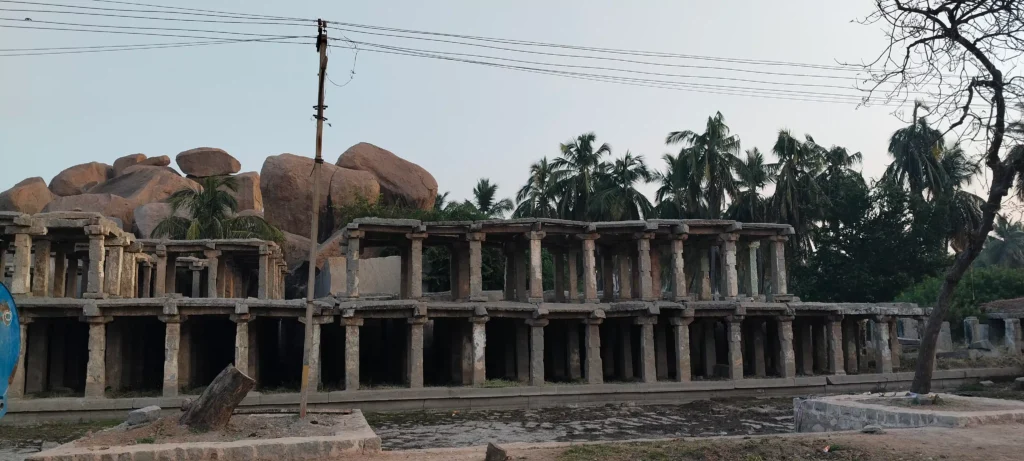
The entire city was surrounded by old monuments, standing as a lively testament to the grand Vijayanagara Empire.
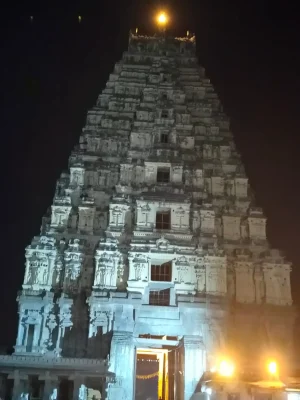
I could feel the vibes and pure happiness of moving through this place where so many great people laid down the foundation of the empire. Witnessing this scenario, we entered the sacred complex of the Virupaksha Temple, where the intricate carvings seemed to whisper stories of a golden era.
Where Legends Walked: Beyond the Witty Poet
Walking among these stones brought back childhood memories. Earlier, Tenali Rama was just a witty poet and comedy hero for me.
But as I grew up, I came to know more about him as one of the elite “Ashtadiggajas” of the royal court. He was not only a witty poet, but a hardworking, talented scholar from a small village in Tenali, Andhra Pradesh, who became a key part of the administration.
Along with him, the royal priest Tatacharya, the great ruler Krishnadevaraya, and Mahamantri Timmarasu all played vital roles in strengthening the empire.
Tatacharya sacrificed his life many times to safeguard the territory and taught many things to Tenali Rama, who was deeply rooted in ethics, values, and strong principles. Walking the very earth they walked gave me an incredible sense of connection to their legacy.
The Indo-Islamic Elegance of Lotus Mahal
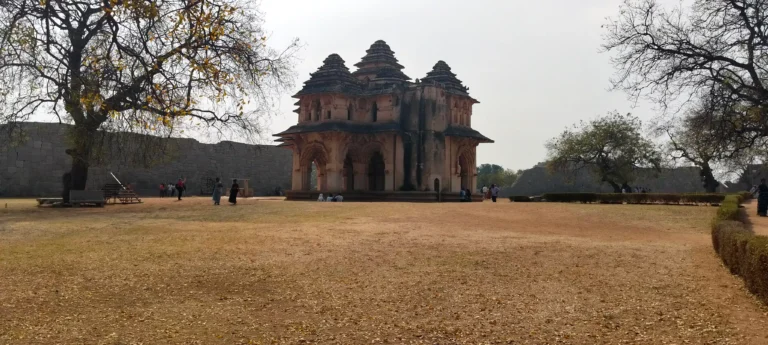
As Rocky drove us deeper into the Royal Enclosure, the architecture shifted, revealing the incredible adaptability of the Vijayanagara builders. We stepped into the walled Zenana Enclosure, and there it stood: the Lotus Mahal.
The vibe here is entirely unique. Unlike the grand granite temples, this two-story pavilion blends Hindu architectural geometry with Islamic style arches, looking exactly like a partially opened lotus bud at the top.
Walking around it, you realize it wasn’t just built for aesthetic pleasure; it featured an ingenious internal water-cooling pipeline system designed to beat the intense Deccan heat for the royal ladies. Standing before it, you can effortlessly visualize the quiet, regal lifestyle that once thrived within these secure walls.
The Submerged Mystique of the Underground Shiva Temple
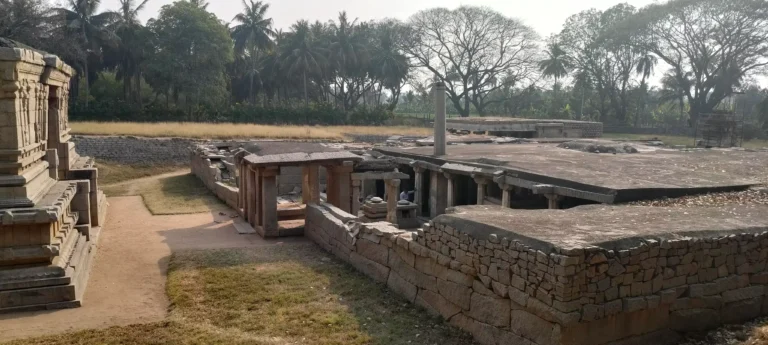
One of the most surreal stops on our route was the Prasanna Virupaksha Temple, commonly known as the Underground Shiva Temple. Because it was built below the surrounding ground level, the temple sanctum and its pillared halls are permanently semi-submerged in water.
Stepping down into the cool, dark stone corridors felt like uncovering a hidden secret. Navigating the shallow water to get a glimpse of the inner architecture adds a profound, mysterious vibe to the exploration. It makes you wonder how the architects managed to channel water so perfectly into the structure centuries ago, keeping the deity perpetually cooled by the earth.
The Scale of Power: Mahanavami Dibba
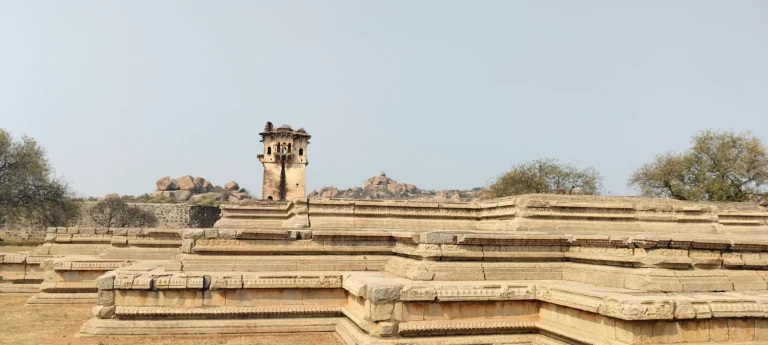
Before leaving the royal boundaries, we stood before the massive Mahanavami Dibba. This giant, three-tiered stone platform is where King Krishnadevaraya used to sit on his gem-studded throne to witness the grand nine-day Navaratri celebrations, military parades, and games.
Climbing the steep stone steps brings you to one of the highest vantage points in the enclosure. The sides of the platform are a literal stone canvas, carved meticulously with scenes of royal hunts, foreign traders, dancers, and elephants. Standing on top, looking out across the vast, sprawling ruins of the palace foundations and the nearby stepped geometric Pushkarni tank, the true sheer scale and wealth of the empire hits you all at once.
Crossing the Tungabhadra to Vijaya Vittala
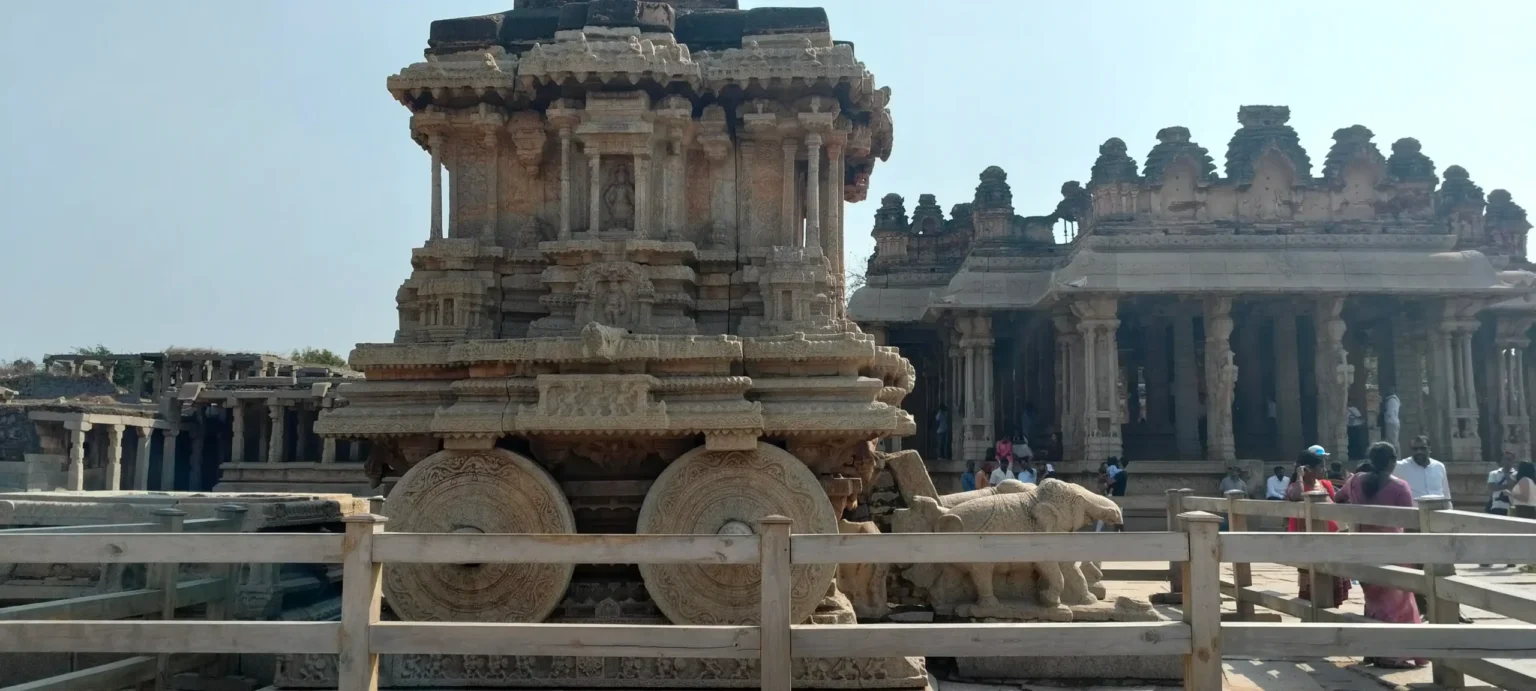
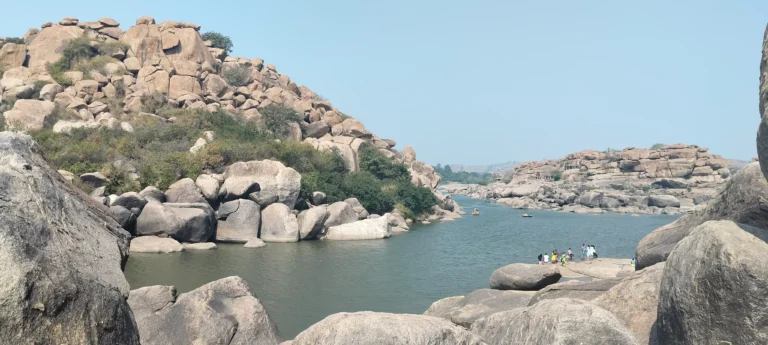
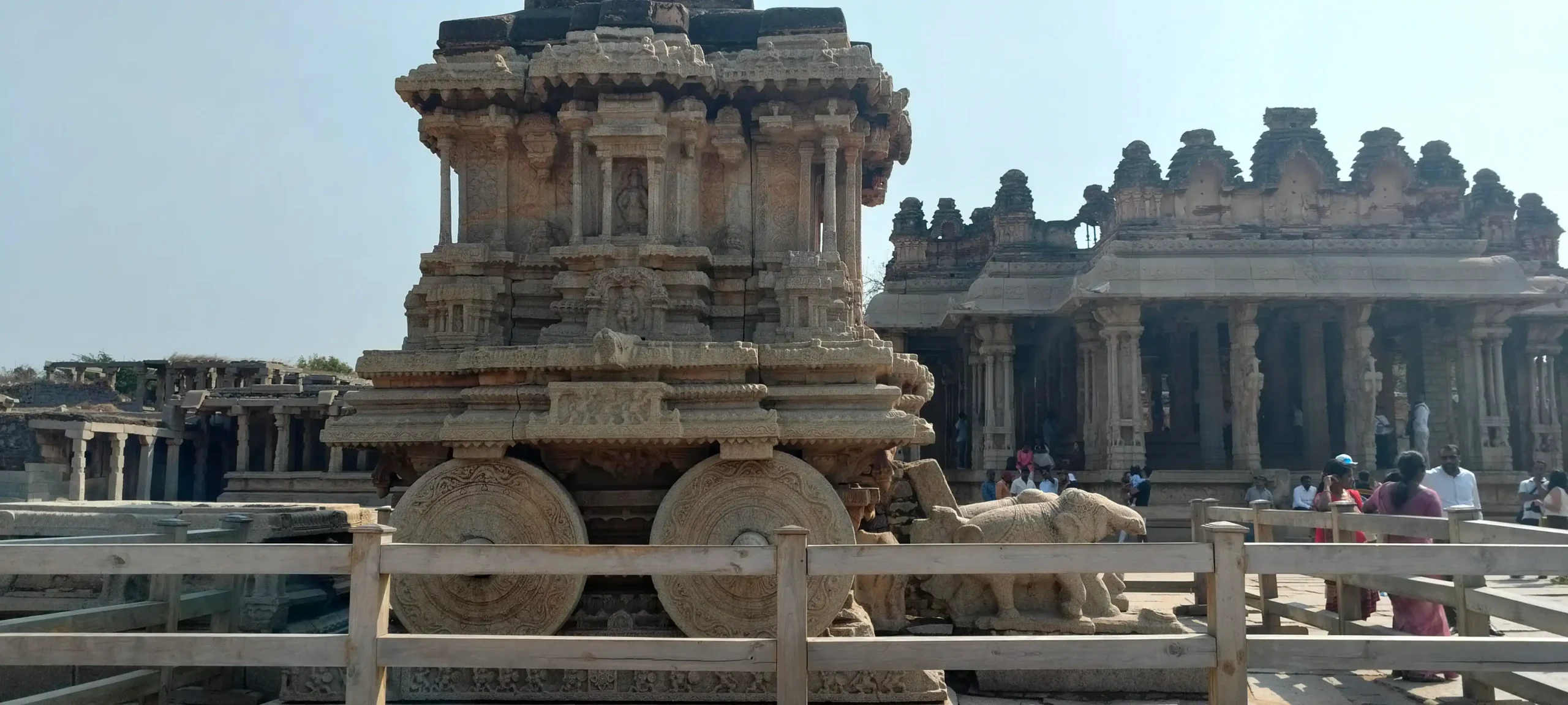
Next, we kept moving toward the deeper ruins of the empire. The landscape was incredibly beautiful, dominated by massive, balancing boulders. We crossed the historic Tungabhadra River to visit the iconic Vijaya Vittala Temple.
This architectural marvel speaks volumes about the victories and peak artistic achievements of the Vijayanagara kingdom. Seeing the legendary stone chariot and the musical pillars up close was a surreal moment that highlighted the absolute brilliance of ancient Indian craftsmanship.
Sunrise at the Birthplace of Hanuman: Anjanadri Temple
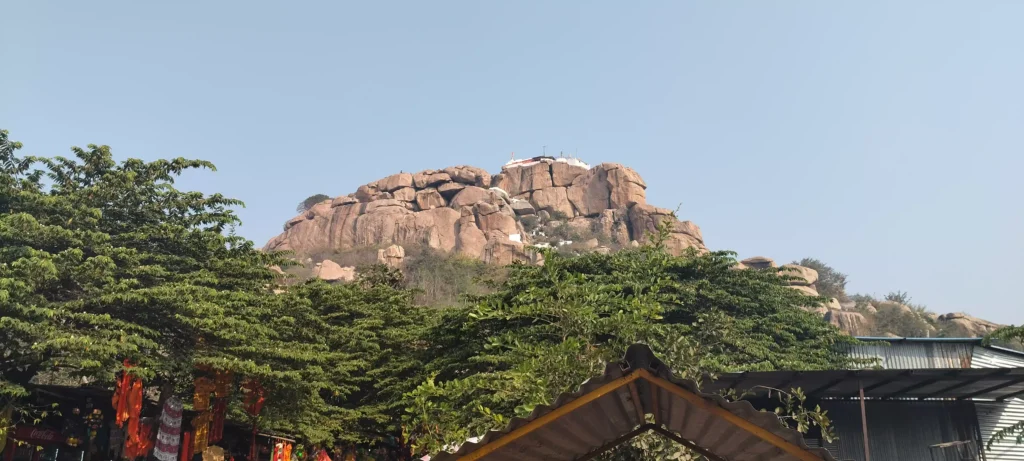
The next day, we crossed over to visit the Anjanadri Temple, revered as the birthplace of Lord Hanuman. Climbing the steps to the top of the hill tested our stamina, but the reward was unmatched.
The raw beauty of the place, perched high above the plains, offered a breathtaking panoramic view of the entire Hampi landscape. Looking out over the river, the ruins, and the endless palm groves from that sacred peak was a spiritual vibe I will never forget.
The Trip Ended With Lots of Memories!
Finally, we headed back to the hotel to wrap up the journey and pack our bags. None of this trip would have been the same without Rocky.
He wasn’t just an auto driver; he was a true companion who guided us through the history, navigated the rocky terrain perfectly, and ensured we experienced the absolute best of Hampi before dropping us safely back at the bus stand for our return journey.