The GEO Tech Stack: Building Your Search Intelligence Pillar

GEO Tech Stack

Gone are the days when generating traffic alone through legacy search history guaranteed a ranking or a conversion.


Have you ever felt that frustration? I recently executed a strategy across multiple platforms, and while the content ranked well, I noticed a troubling trend: high rankings didn’t always translate into tangible results.’


Does a #1 spot even if a Generative Engine summarizes your hard work and the user never actually clicks through?


This disconnect led me to run a series of experiments within my Marketing Operating System (mOS)


I realized the traditional “Keyword-First” approach is failing because it ignores the “Zero-Click” Reality of 2026. 


According to recent Ahrefs report, keywords that trigger an AI Overview (AIO) now see a 58% drop in CTR for the top organic spot. Essentially, Google is “keeping” 58 out of every 100 clicks that used to belong to us.


To bridge this gap, we have to move beyond basic answer-matching and toward Search Intelligence by building a dedicated GEO Tech Stack.


The Shift from AEO to GEO


In 2026, AEO (Answer Engine Optimization) has already become a baseline commodity. Everybody knows it’s about results and intent, but most are still guessing at how to run it. To actually drive revenue, we must pivot to GEO (Generative Engine Optimization).’


The shift is backed by staggering data. According to the latest Semrush AI Overviews Study, AI-generated summaries now appear in roughly 16% of all Google queries, with a massive spike in commercial and transactional intent (up to 18.5% and 13.9% respectively).


Think of it this way: AEO is about being the answer,  but GEO is about being the authority that the engine trusts to build that answer. 


My experiments proved that while an answer might get you a mention, optimization for the engine’s synthesis is what actually captures the conversion. We are moving away from vanity clicks and toward a new North Star: Share of Model (SoM) and Citation Velocity.


Why My Experiments Led to “Search Intelligence”


When my blogs ranked but didn’t “perform,” it was because I was winning the keyword battle but losing the Information Gain war. 


I wasn’t optimizing for how a Generative Engine prioritizes one source over another. Semrush data shows that keywords triggering these AI Overviews tend to be longer and more specific the exact “intent-heavy” queries where we used to thrive.


To stay ahead, your LLM Optimization Strategy must be backed by a technical infrastructure that can handle:

  • Generative Engine Optimization (GEO): Moving from being a “search result” to a “validated solution” integrated into the AI’s logic.
  • Real-time API Indexing: Using protocols like IndexNow to ensure LLMs don’t “hallucinate” based on outdated data.
  • Brand Citation Gap Analysis: Identifying exactly where competitors are being cited so you can systematically bridge the authority gap.


The real crux of GEO is moving from being “found” by a user to being “integrated” into the AI’s logic. When a Generative Engine cites you as the definitive source, you aren’t just a search result: you become the validated solution that drives immediate user trust.


The GEO Tech Stack: Strategic Tools to Own the Search Intelligence Pillar


Building a Marketing Operating System (mOS) that actually converts in 2026 requires more than just “writing content.” You need a technical foundation that treats your website as a data source for AI.


Here is the breakdown of the GEO Tech Stack, categorized by the specific intent each tool serves in your workflow.

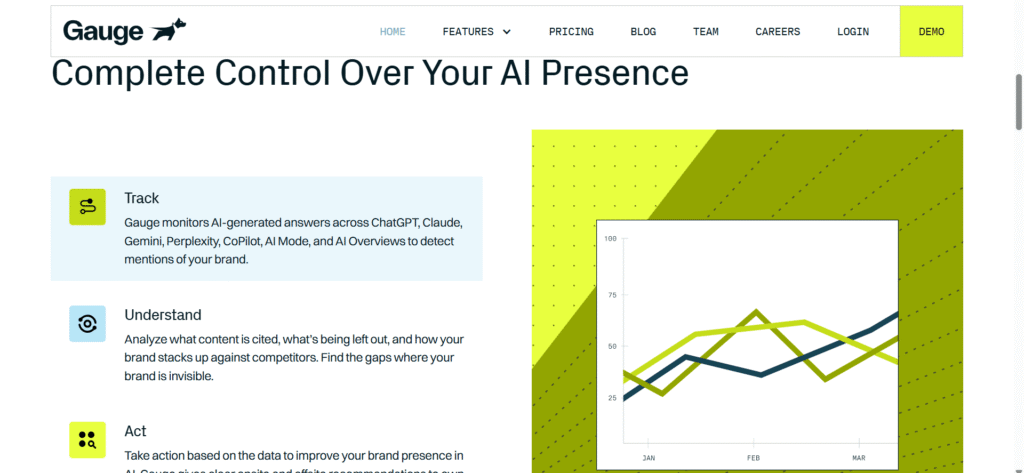
Gauge

Measuring Your “Share of Model” (SoM) and AI Visibility

Before you can optimize, you need to know if the machines even know you exist. These tools move beyond “Page 1” and show you how often you are actually being synthesized into an answer.

  • Gauge | Objective: Competitive Benchmarking
    This is your primary intelligence tool. It doesn’t just track rankings; it runs thousands of prompts to see how often ChatGPT or Perplexity recommends your brand over a competitor. It identifies your “Citation Gaps,” showing you exactly which queries you’re losing to the competition.
  • Semrush AI Visibility Toolkit | Objective: Monitoring Search Displacement
    Use this to identify which of your high-traffic keywords are being “stolen” by AI Overviews (AIO). It allows you to see if your link is being used as a primary source in the summary or if you’ve been pushed “below the fold” by the generative response.
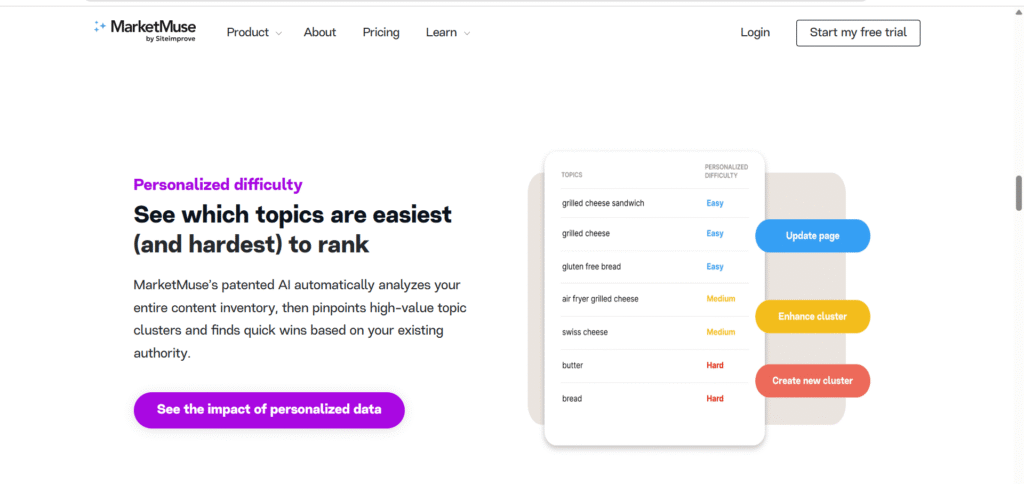
Market Muse, GEO Tech Stack

Boosting “Information Gain” and Authority

Generative engines ignore generic marketing fluff. To be cited, your content must provide Primary Data: original insights that the AI can’t find elsewhere.

  • MarketMuse | Objective: Closing the Knowledge Gap
    This is the “Expertise Validator” for your mOS. It scans your drafts and flags exactly which technical subtopics or data points you’ve missed. By filling these gaps, you provide the Semantic Depth that LLMs require to trust you as a definitive source.
  • Geoptie | Objective: Pre-Publishing Probability Testing
    Think of this as a “GEO Scorecard.” You paste your URL before hitting publish, and it gives you a technical breakdown of how likely an AI model is to summarize your page. It’s the ultimate gut check to ensure your content is “machine-optimized.”
WordLift, GEO Tech Stack

Accelerating Machine Readability and Indexing

If the AI crawlers can’t digest your site instantly and accurately, your “Search Intelligence” pillar will crumble. These tools handle the technical “handshake” between your server and the LLMs.

  • WordLift | Objective: Automating the Knowledge Graph
    This is a “set it and forget it” tool for your technical stack. It automatically turns your articles into Structured Data (Schema). It builds a map of your site that AI agents can ingest with zero friction, ensuring they understand your brand’s entities and relationships perfectly.
  • IndexNow | Objective: Eliminating Data Obsolescence
    In 2026, citing outdated 2024 data is a death sentence for your authority. This protocol pings engines the millisecond you update a stat, quote, or price. It ensures the AI is always working with your freshest insights, preventing “hallucinations” based on old cached pages.

The Strategic Benefits of a GEO-First Approach


Why bother about moving your entire mOS from AEO to GEO? Because in 2026, the rewards aren’t just about traffic: they are about Brand Equity in an automated world.


  • Dominance in AI-Synthesized Answers: When a user asks an LLM for a recommendation, GEO ensures your brand isn’t just a link in a list, but the actual answer provided by the engine.
  • Massive Gains in Information Gain (EEAT): By optimizing for “Primary Data” rather than keywords, you naturally build the highest level of Trust and Authority, which Google still rewards in traditional search.
  • Reduced “Zero-Click” Friction: Even if a user doesn’t click through to your site, being the cited authority in an AI Overview builds immediate mental availability and brand recall.
  • Future-Proofing Your Visibility: Gartner predicts a 25% drop in traditional search volume by the end of this year. GEO is your insurance policy against the collapse of the legacy clickstream.

Conclusion


We’ve covered the “what,” the “why,” and the “how” of integrating GEO into your Marketing Operating System. By now, you should have a clear blueprint for transforming a fragmented, keyword-obsessed stack into a unified, Search Intelligence engine that actually drives revenue in 2026.


Building an mOS is a journey of continuous optimization, not a one-time setup. My recent experiments have proven that the “Information Gain” war is won by those who treat their brand as a data source for AI, not just a destination for clicks.


I’ll be sharing more deep dives into GEO Tech Stacks, MarTech Ops, and Demand Generation to help you stay ahead of the curve as the search landscape shifts. Don’t miss the next field report – subscribe to the newsletter to get these validated strategies and “Share of Model” frameworks delivered directly to your inbox.




Frequently Asked Questions

What is the difference between AEO and GEO in 2026?

While Answer Engine Optimization (AEO) focuses on providing a direct answer to a query, Generative Engine Optimization (GEO) is about becoming the authoritative source that an AI model trusts to synthesize that answer. AEO is the baseline for visibility, but GEO focuses on “Share of Model” and ensuring your brand is integrated into the AI’s logical conclusion.

Why is "Information Gain" important for the GEO Tech Stack?

Information Gain refers to providing unique, primary data or original insights that a Generative Engine cannot find in other top-ranking results. Because AI models prioritize sources that add new value to their training data rather than repeating existing content, high Information Gain is the primary driver for earning citations in AI Overviews.

How does the IndexNow protocol help with Search Intelligence?

IndexNow is a technical “handshake” that instantly notifies search engines and LLM crawlers the moment you update or publish content. In a 2026 search environment, this eliminates “data obsolescence,” ensuring that AI models don’t provide hallucinations based on outdated information and instead cite your freshest stats, quotes, and research.

About Ayush Kumar

Ayush Kumar is a strategic content architect dedicated to helping brands transform fragmented marketing efforts into unified growth engines. With a proven track record of developing SEO and content plans for diverse companies, Ayush specializes in leveraging complex tech stacks to drive measurable results.

He is running ayushwrites.in, a platform designed to help businesses navigate the intersection of search intelligence and marketing technology. Originally from the “Land of the Ganga,” Ayush is a traveler at heart, constantly exploring new places and perspectives to fuel his creative strategy.

Connect with Ayush on LinkedIn: In/AayushKnack

Amazing Years

I started my journey back in 2016. I worked with so many amazing companies and learnt a lot throughout this journey. And I’m still learning new skills and knowledge. 

Thank you for encouraging Me!

Each time you visit this page, you encourage me to perform better and better. So thank you for visiting and getting to know about me!

Answer Engine Optimization AEO

Why Your Brand Needs Answer Engine Optimization (AEO) in 2026?

Why Your Brand Needs Answer Engine Optimization (aEO) in 2026 Answer Engine Optimization (AEO) is the next evolution in driving organic website traffic. It enables website owners to gain visibility and authority directly within AI-driven search results. For example, when...

Read More