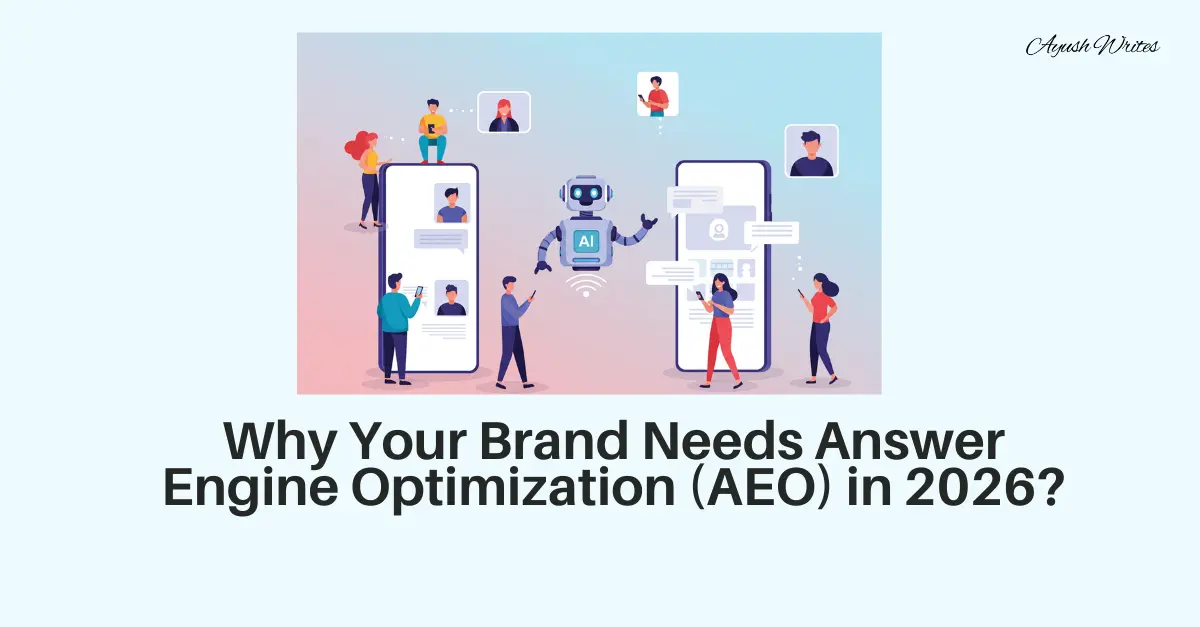
Answer Engine Optimization (AEO) is the next evolution in driving organic website traffic. It enables website owners to gain visibility and authority directly within AI-driven search results. For example, when a user asks Gemini a complex question, AEO ensures your content is the one reflected and cited as the primary source.
But why does this matter?
By appearing in these AI summaries, you capture high-intent users who want deeper insights. As they click through to your site to learn more, your traffic grows. With Gartner predicting a 25% drop in traditional search volume in favor of AI-powered engines, shifting your strategy to AEO in 2026 is the need of the hour.
AEO vs SEO: What’s the difference?
Is AEO the future of SEO? Technically, yes. AEO plays a similar role to SEO, but with a different approach. While SEO focuses on driving traffic from traditional search engine results, AEO focuses on capturing visibility within AI-powered answers.
For example, if someone searches Google for “ten tips for losing weight,” they typically visit a website from a list of blue links. However, users are now searching the same topic on Gemini to get instant insights without scrolling through multiple pages. If Gemini highlights your content as the source, users who find it valuable will click through to your site. This process is also known as Generative AI Engine Optimization (GEO), and the search strategy is called AI search strategy.
Does this mean SEO is dead? Absolutely not. Traditional search still fuels deep research, but AEO is the fast-growing ‘Front Door’ of 2026 discovery.
How To Optimize A Website For AI Overviews?
There is a significant shift in how we make websites AI-friendly, but first, it’s important to understand: AEO is not a substitute for traditional SEO. Keywords and search rankings are still the foundation. AEO simply takes those keywords and maps them to specific user intents. Even in an AI-driven world, your audience still uses phrases and queries that align with a solid keyword strategy. Think of AEO as an essential addition to your ongoing SEO efforts, not a replacement.
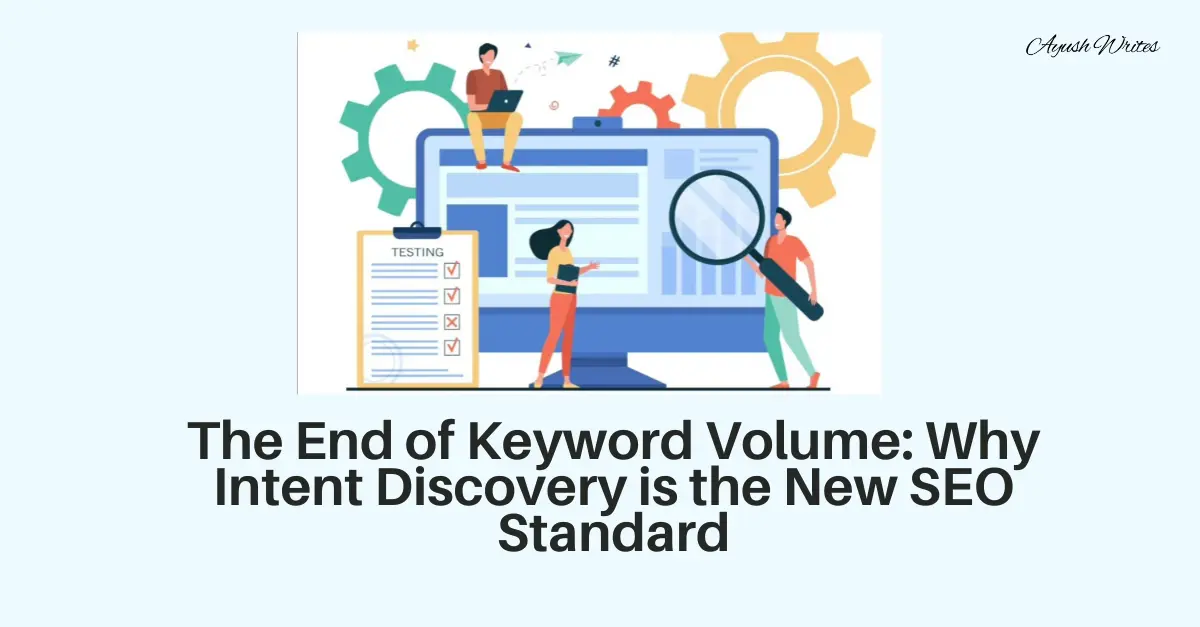
To win in AI search, your focus must shift toward intent-based writing. Here are the rules for AEO optimization:
- Question & Answer Format: Structure your content to solve problems directly. Use a straightforward “Problem-Solution” approach.
- Avoid Jargon: Write clearly and concisely. Avoid “fluff” or confusing industry jargon that might trip up an AI crawler.
- Data-Driven Insights: AI models prioritize facts. Always cite external sources, proprietary data, or verified statistics to make your content more authoritative.
- Machine-Readable Structure: Use proper hierarchy with subheadings (H2, H3), bullet points, and numbered lists to make your information easy to extract.
- E-E-A-T for AI search: Reinforce your expertise by linking to your credentials and ensuring all data is verifiable.
AEO: The “Search Intelligence” Pillar of Your Marketing OS
“Just like SEO, AEO (Answer Engine Optimization) is a critical component of search intelligence. By carefully applying the strategies discussed above, you can drive significant traction and high-value visibility for your brand.
As the usage of AI search grows, AEO is booming as a core ‘Search Intelligence’ pillar for your Marketing Operating System. According to industry data from Elementor, the conversion rate of visitors coming from AI results is often 12% to 18% higher than traditional organic search. Furthermore, Google’s AI Overviews now reach over 2 billion people monthly—a staggering level of exposure that no modern marketer can afford to ignore.
Because AEO drives better conversion rates and reaches a massive audience, it is a primary driving force for growing your Marketing OS. Much like organic SEO, it helps convert traffic into high-quality leads. Once a user lands on your website through an AI citation, they are already primed to engage with your brand and fill out your forms. Ultimately, your growth depends on search visibility, and in 2026, AEO is where that visibility begins.”
How Can You Measure Your AEO Success?
AEO success goes beyond traditional rankings. Unlike standard Google search results, the AEO mechanism doesn’t just rank content based on keywords; it prioritizes relevancy to the user’s specific query.
For example, if a prompt asks a very nuanced question and the AI finds a direct, relevant answer in your blog, your content “hits the bar” and gets cited.
Conversely, if a query is asked and your blog fails to address the specific intent, you are unlikely to gain highlighted visibility. Success in 2026 depends entirely on whether your answer satisfies the user’s intent.
Therefore, the best way to measure AEO success in 2026 is by focusing on these four aspects:
- Manual Intent Testing: Enter specific prompts into AI search engines that align closely with your topics. Monitor whether your website is being pulled as a source.
- Brand Sentiment & Credibility Audit: Ask AI about your brand to see how it describes your credibility. If the AI is missing key facts or misrepresenting your brand, you can address these gaps in real-time by updating your site’s “About” or “Authority” sections.
- Citation Hierarchy: Check whether your website appears in the “Core Answer” (the main summary) or merely in the “End Notes” or footnotes. Core visibility drives much higher trust and click-through rates.
- GA4 AI Referral Tracking: Set up custom filters in Google Analytics 4 (GA4) to isolate traffic coming from AI sources like chatgpt.com, perplexity.ai, and gemini.google.com
Conclusion
In this guide, we have explored the rise of AEO, why it is a non-negotiable shift for 2026, and how you can optimize your brand by blending it with traditional SEO. By now, you should have a clear understanding of Answer Engine Optimization and its critical role as the “Search Intelligence” pillar within your Marketing Operating System (MOS).
AEO is just the starting point. As AI agents like Gemini and ChatGPT become the “front door” to the internet, your ability to provide clear, citable answers will determine your brand’s growth.
I will be sharing deeper strategies on AEO implementation and advanced search intelligence soon, so stay tuned.
Thank you for reading.